UFLI and Spelling: The Complete Guide to UFLI Foundations
In this guide
This is a comprehensive guide to UFLI and spelling instruction. Use the links below to jump to the section you need, or explore our detailed companion pages:
- What is UFLI? - Background, history, and what UFLI stands for
- The Simple View of Reading - The research framework behind UFLI
- UFLI’s approach to spelling - How UFLI weaves spelling into every lesson
- UFLI tools and resources - Official UFLI materials
- UFLI scope and sequence - The full 128-lesson phonics progression, phase by phase
- UFLI word lists by lesson - Spelling words organized by UFLI lesson and phonics pattern
- UFLI heart words - What heart words are, examples by lesson, and how to teach them
- Implementation and adoption - How UFLI has spread across all 50 states
- Research and effectiveness - What the studies say
- UFLI spelling activities and worksheets - Sorts, Roll and Read, games, and more
- UFLI compared to other programs - UFLI vs. Orton-Gillingham, Words Their Way, and others
- UFLI for parents - How to support UFLI spelling practice at home
- Frequently asked questions
Introduction
If you’re a teacher or parent who’s heard about UFLI but aren’t sure what it actually is, you’re not alone. UFLI (pronounced “you-fly”) is the University of Florida Literacy Institute, and over the past few years it has quietly become one of the most widely used reading programs in the country. In this post, we’ll break down what UFLI is, what the UFLI reading program looks like in practice, and how it connects to spelling instruction.
What Does UFLI Stand For?
UFLI stands for the University of Florida Literacy Institute. It started back in 1998 as a tutoring model for struggling beginning readers at the University of Florida. Over the years, it grew into a full literacy education program that now includes teacher training, classroom curricula, and parent resources. Today, when most people say “UFLI” they’re usually referring to UFLI Foundations, the program’s flagship early literacy curriculum released in 2022. In education circles, the UFLI meaning has become shorthand for a research-backed way to teach reading and spelling together.
Understanding UFLI’s foundation: the Simple View of Reading
So what is UFLI’s approach based on? The UFLI program is grounded in the Simple View of Reading (SVR), a framework developed by Hoover and Gough (1986) that’s aligned with the Science of Reading. The idea is straightforward: reading comprehension is the product of two things working together: decoding ability and language comprehension. You need both. A kid who can sound out words but doesn’t understand what they mean won’t actually be reading. And a kid who understands spoken language but can’t decode printed words is stuck too.
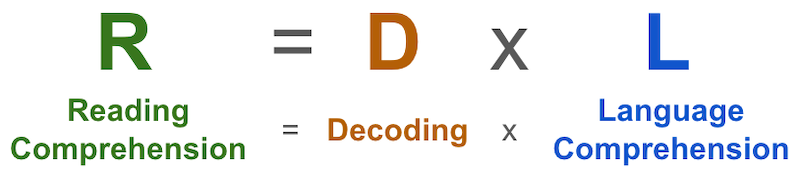
This framework has been tested in over 100 studies across several languages, and the results consistently support it. UFLI Foundations targets both components through systematic, explicit instruction—30 minutes a day of structured phonics lessons alongside language comprehension work.
UFLI’s approach to spelling instruction
The UFLI curriculum doesn’t treat spelling as a separate subject. Instead, it weaves spelling instruction right into its reading lessons. The program focuses on the relationship between phonemic awareness (understanding speech sounds) and orthographic knowledge (understanding spelling patterns). In a typical UFLI spelling lesson, students learn to:
- Segment words into individual sounds
- Match those sounds to letters and letter patterns
- Recognize and apply common spelling rules
- Practice encoding (spelling) and decoding (reading) side by side
This matters because reading and spelling reinforce each other. When a student practices spelling a word, they’re strengthening the same letter-sound connections they use to read that word. So a UFLI spelling test or spelling assessment isn’t really about memorizing word lists. It’s checking whether students actually understand how English spelling works.
For high-frequency words that don’t follow the rules — like said, was, and the — UFLI uses a method called heart words. Rather than asking students to memorize the entire word, UFLI teaches them to sound out the regular parts and “learn by heart” only the tricky letters. This is a significant shift from traditional sight word instruction and aligns with orthographic mapping research.
UFLI tools and resources
The UFLI literacy program has a few different pieces:
- UFLI Foundations: The core early literacy program, covering systematic phonics instruction for kindergarten and first grade
- Virtual Teaching Resource Hub: A free online toolbox with downloadable materials (this site has seen over 18 million views)
- Parent Resource Hub: Resources for parents who want to support their children’s reading and spelling at home
- UFLI Academy: Professional development courses for teachers
Implementation across the United States
What started at the University of Florida has spread far beyond Gainesville. Since the UFLI Foundations teacher manual launched in 2022, the program has taken off largely through word of mouth among teachers. The numbers tell the story:
- Teachers in all 50 U.S. states now use UFLI Foundations
- The program is active in every Canadian province and territory and roughly 60 additional countries (including a dedicated Australian edition)
- Over 500,000 instructional manuals have been distributed
- The UFLI Facebook community has over 273,000 members
- The program has reached more than 10 million children
Several states have moved beyond individual teacher adoption to statewide implementation. In Florida, author James Patterson has invested over $8 million to launch ‘Patterson Literacy Classrooms’ and bring UFLI to every district. This expansion is fueled by the national Science of Reading movement, as UFLI offers a practical bridge between research and the classroom.
Beyond just providing manuals, the University of Florida now operates UFLI Academy to meet the massive demand for teacher training. The program’s effectiveness was recently underscored by research showing that UFLI students can achieve nearly 1.5 years of extra reading growth in a single grade level.Looking forward, a $2 million federal grant in partnership with New York City Public Schools is funding ‘UFLI-AI,’ a project to develop an AI-enhanced portal that automates lesson planning and provides real-time feedback to struggling readers."
Evidence of Effectiveness
So does the UFLI Foundations program actually work? The research conducted thus far indicates a resounding “yes,” with data showing gains that far exceed typical classroom growth.
A study published in Reading Research Quarterly evaluated over 2,700 Florida students during the 2021-22 school year and found that UFLI has a dramatic impact on foundational literacy:
- Kindergarteners using UFLI made gains equivalent to 8 additional months of instruction.
- First graders saw gains equivalent to nearly 1.5 additional years of instruction.
- Students consistently scored significantly higher on DIBELS assessments for word-reading and oral-reading fluency compared to peers in “business-as-usual” classrooms.
These findings are corroborated by a districtwide pilot study evaluated by WestEd, which concluded that UFLI Foundations has a “significant and meaningful impact on early literacy skills.”
One of the most critical takeaways from the research is the role of implementation fidelity. The WestEd evaluation found that teachers who followed the program closely—teaching the eight-step lessons in the recommended sequence and completing every step—saw the most substantial student growth. In short, while the program is highly effective, its success depends on teachers delivering the “dosage” and “adherence” exactly as designed.
UFLI Scope and Sequence Overview
UFLI Foundations consists of 128 cumulative lessons designed to move students from basic letter-sound recognition to complex word structures. The program is organized into five primary sections:
- Getting Ready & The Alphabet (Lessons 1–34): This phase establishes foundational phonemic awareness and introduces all letters of the alphabet, focusing on their most common sounds and letter formation.
- Short Vowels (Lessons 35–41): Students move into more intensive CVC (consonant-vowel-consonant) blending and segmenting, focusing on closed syllables like mat, fit, and bus.
- Digraphs & Blends (Lessons 42–53): This section introduces “two letters, one sound” (digraphs) like sh, ch, th, and ng, as well as consonant clusters (blends) such as st, fl, and str.
- VCe & R-Controlled Vowels (Lessons 54–76): Students learn the “Magic E” pattern (lake, kite, hope) and the “Bossy R” patterns (ar, er, ir, or, ur) which change how vowels behave.
- Vowel Teams & Advanced Patterns (Lessons 77–128): The final section covers complex vowel teams (ai, ee, oa, ou), diphthongs (oi, oy), silent letters, and advanced suffixes.
Integrated Multisyllabic Instruction: Unlike programs that save long words for the end, UFLI integrates multisyllabic word decoding as soon as students master the necessary patterns. Every lesson emphasizes encoding (spelling) alongside decoding (reading) to ensure students can both read and write the patterns they learn.
For the full breakdown with example words and spelling connections at every phase, see our complete UFLI scope and sequence guide.
UFLI word lists for spelling practice
Teachers often need additional words beyond what’s in the UFLI manual for spelling tests, homework, and differentiation. We’ve organized UFLI-aligned word lists by lesson that follow the same phonics progression, so the words your students practice always match what they’ve been taught.
These word lists are available as ready-to-use spelling tests on Spelling Test Buddy. You can assign them with one click, and students hear each word read aloud before typing their spelling.
UFLI spelling activities and worksheets
UFLI’s built-in lesson structure gives you 30 minutes of daily instruction, but many teachers want supplementary activities for centers, homework, or additional practice. Here are activities that align well with UFLI’s approach:
- Word sorts - Have students sort words by spelling pattern (e.g., short a vs. long a with silent e). Sorts are backed by decades of research and work naturally with UFLI’s pattern-based approach.
- Roll and Read worksheets - Inspired by UFLI’s own Roll and Read activity, these printable worksheets can be generated from any word list in seconds.
- Spelling games - Word Scramble Race and Crossword Bee turn spelling practice into something students look forward to.
- Read, Sort, and Write worksheets - Students read a word, decide which pattern it belongs to, and write it in the correct column. This is a fundamental activity in the UFLI approach.
All of these can be organized by where students are in the UFLI scope and sequence, so the activities always match the instruction.
How UFLI compares to other programs
UFLI Foundations exists alongside several other structured literacy programs. Here’s how it relates to the most common ones:
UFLI vs. Orton-Gillingham
Both UFLI and Orton-Gillingham (OG) are systematic, explicit phonics programs grounded in the Science of Reading. The key differences:
- Setting: UFLI was designed for whole-class instruction. OG was originally developed as a one-on-one intervention approach.
- Structure: UFLI provides a scripted, lesson-by-lesson curriculum. OG is more of a framework that trained practitioners adapt to each student.
- Cost and access: UFLI Foundations has a relatively low-cost manual and free online resources. OG training and certification can be expensive.
- Spelling integration: Both integrate spelling, but UFLI includes spelling dictation in every lesson by default, while OG lessons vary by practitioner.
UFLI vs. Words Their Way
Words Their Way (WTW) takes a developmental spelling approach, assessing where students are and grouping them by spelling stage. UFLI takes a scope-and-sequence approach, teaching all students the same progression.
- Assessment: WTW starts with a spelling inventory to place students. UFLI starts at Lesson 1 and moves through systematically.
- Instruction model: WTW is heavily sort-based and often individualized. UFLI is whole-group with a consistent lesson structure.
- Flexibility vs. fidelity: WTW gives teachers more flexibility in choosing words and activities. UFLI research shows better results when teachers follow the program as designed.
Both programs can complement each other. Teachers using UFLI for core instruction sometimes use WTW-style sorts for supplementary practice.
UFLI vs. Fundations
Fundations (by Wilson Language) is another systematic phonics program commonly used in K-3 classrooms. Both programs are aligned with the Science of Reading and share a similar phonics progression. The main differences are in lesson format, pacing, and available materials. UFLI’s free online resources and lower cost have contributed to its rapid adoption.
Using UFLI at home
If your child’s school uses UFLI, here’s how you can support their spelling development at home:
- Ask the teacher where your child is in the sequence. Knowing the current lesson number tells you exactly which phonics patterns your child is working on. Our scope and sequence overview can help you understand what that means.
- Practice the current pattern, not random words. If your child is on vowel teams, practicing CVC words won’t help them grow. Use word lists matched to their current lesson for at-home practice.
- Use UFLI’s free parent resources. The UFLI Parent Resource Hub has activities and guidance designed specifically for families.
- Make it low-pressure. UFLI’s approach is about understanding patterns, not memorizing lists. If your child misspells a word, ask them what sounds they hear and which letters make those sounds.
- Try online practice. Spelling Test Buddy lets students practice spelling with audio support at home, and parents can see which words they got right and wrong.
Frequently asked questions
What does UFLI stand for?
UFLI stands for the University of Florida Literacy Institute. It was founded in 1998 at the University of Florida. The program most people refer to as “UFLI” is UFLI Foundations, the flagship phonics curriculum released in 2022.
Is UFLI free?
The UFLI Foundations teacher manual is not free (it’s available for purchase), but many supporting materials are free through the UFLI Virtual Teaching Resource Hub. The manual is relatively affordable compared to other structured literacy programs.
What grade levels does UFLI cover?
UFLI Foundations is designed primarily for kindergarten and first grade. However, many teachers use it successfully for intervention with older students (grades 2-5 and beyond) who have gaps in foundational phonics and spelling skills.
Is UFLI aligned with the Science of Reading?
Yes. UFLI is grounded in the Simple View of Reading and the broader Science of Reading research base. Its systematic, explicit phonics instruction aligns with what decades of reading research recommends.
Can I skip lessons in UFLI?
Research suggests you shouldn’t. The study in Reading Research Quarterly found that teachers who followed the lessons in order saw better results. If your students have already mastered certain patterns, you can move through those lessons more quickly rather than skipping them entirely.
Does UFLI work for students with dyslexia?
UFLI’s systematic, explicit approach to phonics instruction is consistent with what research recommends for students with dyslexia. Many intervention specialists use UFLI Foundations alongside other tools. For students who need more intensive support, one-on-one approaches like Orton-Gillingham may be used as a supplement.
How does UFLI handle spelling assessment?
UFLI includes encoding (spelling) practice in every lesson through dictation activities. For formal spelling assessment, many teachers supplement with weekly spelling tests using words from the current lesson’s phonics pattern. Spelling Test Buddy makes this easy by providing audio-based spelling tests that align with UFLI’s progression.
Conclusion
UFLI has gone from a university tutoring program to one of the most widely used literacy curricula in the country. It gives teachers a clear, research-backed structure for teaching reading and spelling together, and the early results are strong. Whether you’re a teacher implementing UFLI for the first time or a parent trying to understand what your child is learning, we hope this guide is a useful starting point.
Keep exploring:
- UFLI Scope and Sequence - The full 128-lesson progression with spelling connections at every phase
- UFLI Word Lists by Lesson - Spelling words aligned to each phase of UFLI Foundations
- UFLI Heart Words - What heart words are, how to teach them, and a complete list by lesson
- Science of Reading and Spelling - The broader research context behind UFLI
- Phonemes vs. Morphemes - The building blocks of spelling that UFLI teaches
Has your school district adopted UFLI? If you’re looking for a way to assess your students’ spelling skills and save time on test day, Spelling Test Buddy lets teachers give online spelling tests and practice. It pairs well with any reading program, including UFLI. Take this sample test, and if you like it, sign up for our 2-week free trial!
References:
- University of Florida Literacy Institute. (n.d.). UFLI: University of Florida Literacy Institute. https://ufli.education.ufl.edu/
- Hoover, W. A., & Gough, P. B. (1990). The Simple View of Reading. Reading and Writing, 2, 127-160.
- Simple View of Reading. (n.d.). In Wikipedia. https://en.wikipedia.org/wiki/Simple_view_of_reading
- Lane, H. B., et al. (2025). Effect of an Instructional Program in Foundational Reading Skills on Early Literacy Development. Reading Research Quarterly. https://ila.onlinelibrary.wiley.com/doi/10.1002/rrq.607
- WestEd. (n.d.). Districtwide Pilot Study of UFLI Foundations. https://www.wested.org/resource/districtwide-pilot-study-of-ufli-foundations/
- University of Florida News. (2025). How a UF reading program is reaching classrooms worldwide. https://news.ufl.edu/2025/08/when-you-learn-to-read-you-fly/